
CIVICUS Monitor: "Taiwan: A bright spot for civic freedoms in Asia finds new ratings report"
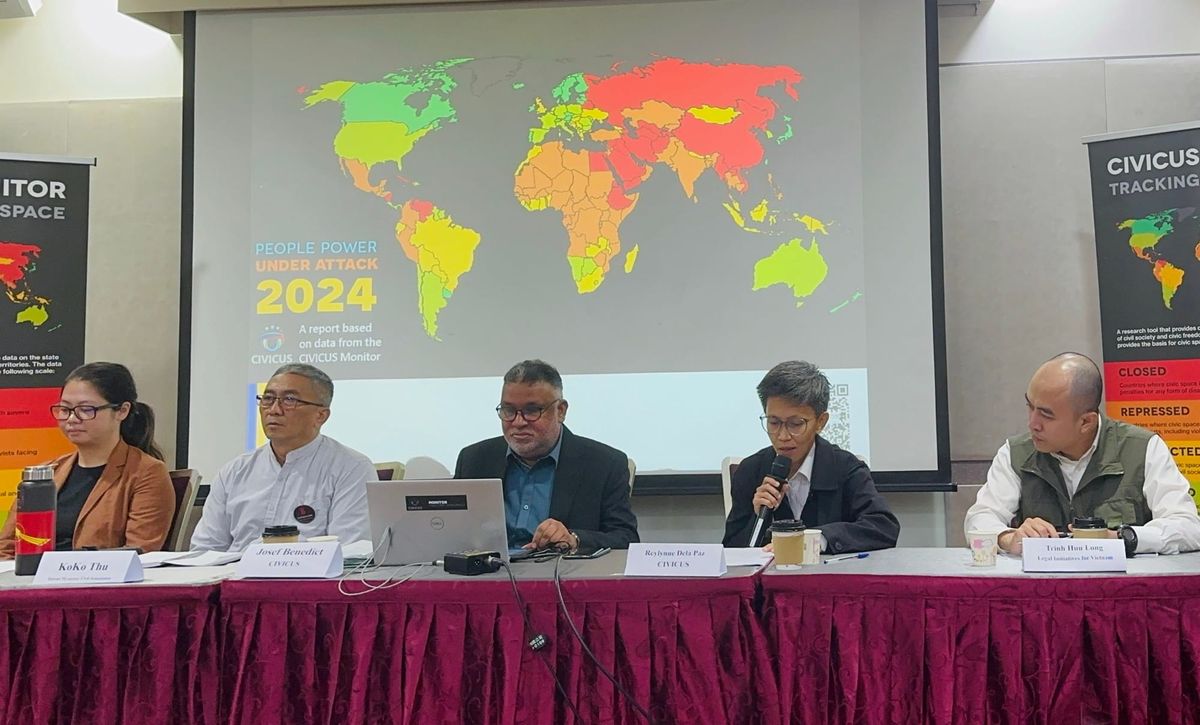
The CIVICUS Monitor announced in a new report Wednesday that Taiwan’s civic space rating has remained ‘Open’ in its annual ratings. People are able to express themselves freely and journalists are able to do their work without reprisals. Peaceful protests on legislative reforms, for labour rights, and solidarity actions for Tibet, Palestine or Hong Kong were held without restrictions. For the most part, civil society groups are able to work across the country without barriers.
Taiwan’s top rating in the People Power Under Attack 2024 report, reflects efforts by the government to adhere to their human rights commitments and ensure the protection of civic freedoms.
“Taiwan has continued to be a bright spot in the region for democracy and the government has maintained its respect for human rights and fundamental freedoms, despite the various challenges and threats it faces, especially from China. The role of civil society in Taiwan has been key to this, playing a crucial role in monitoring the government and consistently highlighting areas for improvement," said Josef Benedict, the Asia Pacific Researcher at the CIVICUS Monitor.
Taiwan still has areas for improvement. There are continued concerns about defamation laws in the Criminal Code. The Assembly and Parade Act requires government approval to hold protests and continues to forbid groups from holding any activities close to specified areas, such as the Executive Yuan, courts at all levels and foreign embassies.
There continue to be barriers to the right to freedom of association in Taiwan. A high number of initiators, 30 people, are required to set up an association according to the Civil Association Act. Foreigners also face challenges to register and operate organisations due to administrative regulations and bureaucracy.
The government can also do more to protect human rights defenders fleeing persecution in the region and become a safe haven. One step in this direction is prioritising the establishment of a law to protect refugees and asylum seekers, which is part of the National Human Rights Action Plan.
The CIVICUS Monitor, a research consortium led by global civil society alliance CIVICUS, tracked civic space conditions in 198 countries throughout the year. Its analysis and rankings are featured in the People Power Under Attack 2024 report, released Wednesday. The Monitor determines countries’ ratings based on data on civic space incidents collected by civil society groups. Incidents may include protests, censorship, arrests of human rights defenders, harassment, and more. Each country is rated out of 100, with higher scores indicating more open civic space.
“While Taiwan has progressed on civic space, it should take steps to ensure all its laws on expression, peaceful assembly and association are consistent with international law and standards” continued Benedict. “The government should expedite the passage of a refugee law to ensure there is adequate protection for human rights defenders and other persecuted individuals arriving in Taiwan.”
Notes to the Editor: The CIVICUS Monitor is a research tool that provides quantitative and qualitative data on the state of civil society and civic freedoms in 198 countries and territories. The data is generated through a collaboration with more than 20 civil society research partners, and input from a number of independent human rights evaluations. The data provides the basis for civic space ratings and countries can be rated as either 'Closed', 'Repressed', 'Obstructed', 'Narrowed' or 'Open'.
For more information or to arrange an interview, please contact: media@civicus.org